








Frequently asked questions about AROS hydraulic cylinders

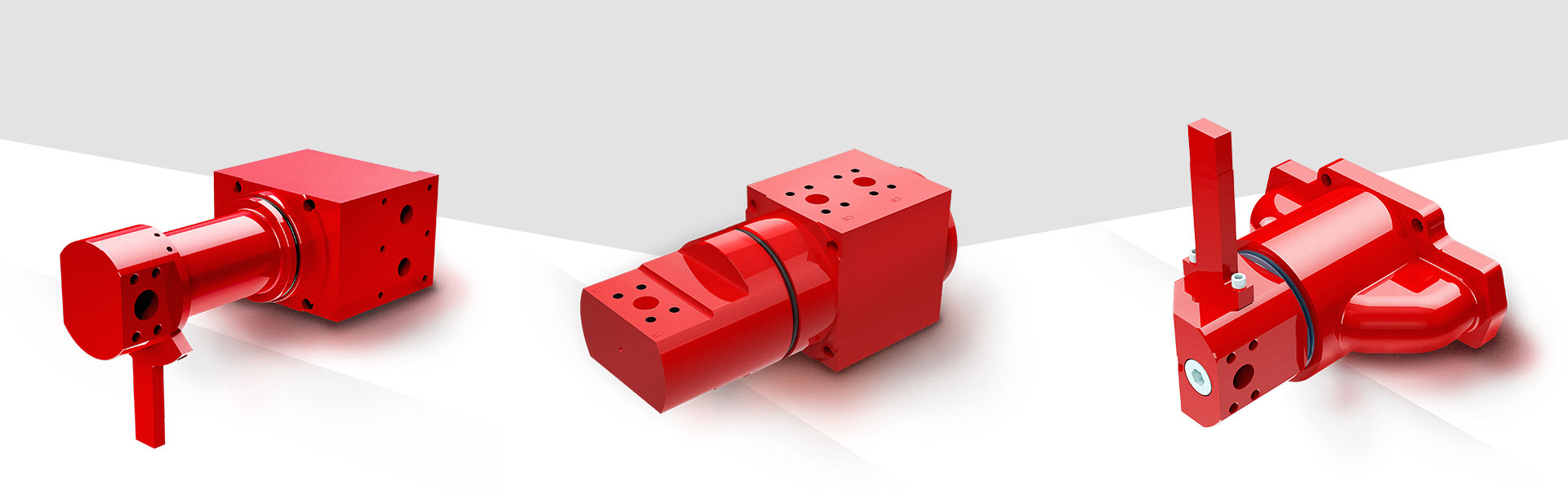
A hydraulic rotary joint is a machine element that transfers hydraulic oil, water or gases from a fixed line system to a rotating or pivoting component without the need for hoses to rotate.
AROS manufactures hydraulic rotary joints exclusively as custom-made products. Each rotary joint is individually designed and constructed in accordance with your specifications — there is deliberately no modular or catalog program.
AROS produces rotary joints with rotor diameters of up to 800 mm; construction lengths and weights are possible far beyond catalog standards.
Both liquid media such as oils and water as well as gaseous media such as technical gases and air — if required, multi-channel combined in a rotary joint.
Operating pressures of up to 700 bar can be achieved, depending on design, medium and other operating parameters.
For an initial design, information on installation space, operating pressure per channel, speed, medium, connection configuration and special environmental conditions (e.g. ATEX, temperature range, salt water) are helpful. A customer drawing is welcome, but not absolutely necessary.
Yes Designs for ATEX zones, low-temperature and high-temperature areas, saltwater environments, acidic media and environments with high levels of contamination are possible and are taken into account right from the design phase.
Each rotary joint undergoes a pressure and function test with an associated test report as standard. Further evidence, such as initial sample test reports or customer-specific testing processes, is available on request.
The turnaround time depends on the complexity and testing requirements of the respective application. After we have received your specifications, you will receive a specific schedule from us.
In particular for crane and lifting technology, hydraulic steel construction and hydropower, marine and offshore applications, industrial presses and commercial vehicle and attachment technology — wherever large dimensions, high pressures or demanding environmental conditions are required.